
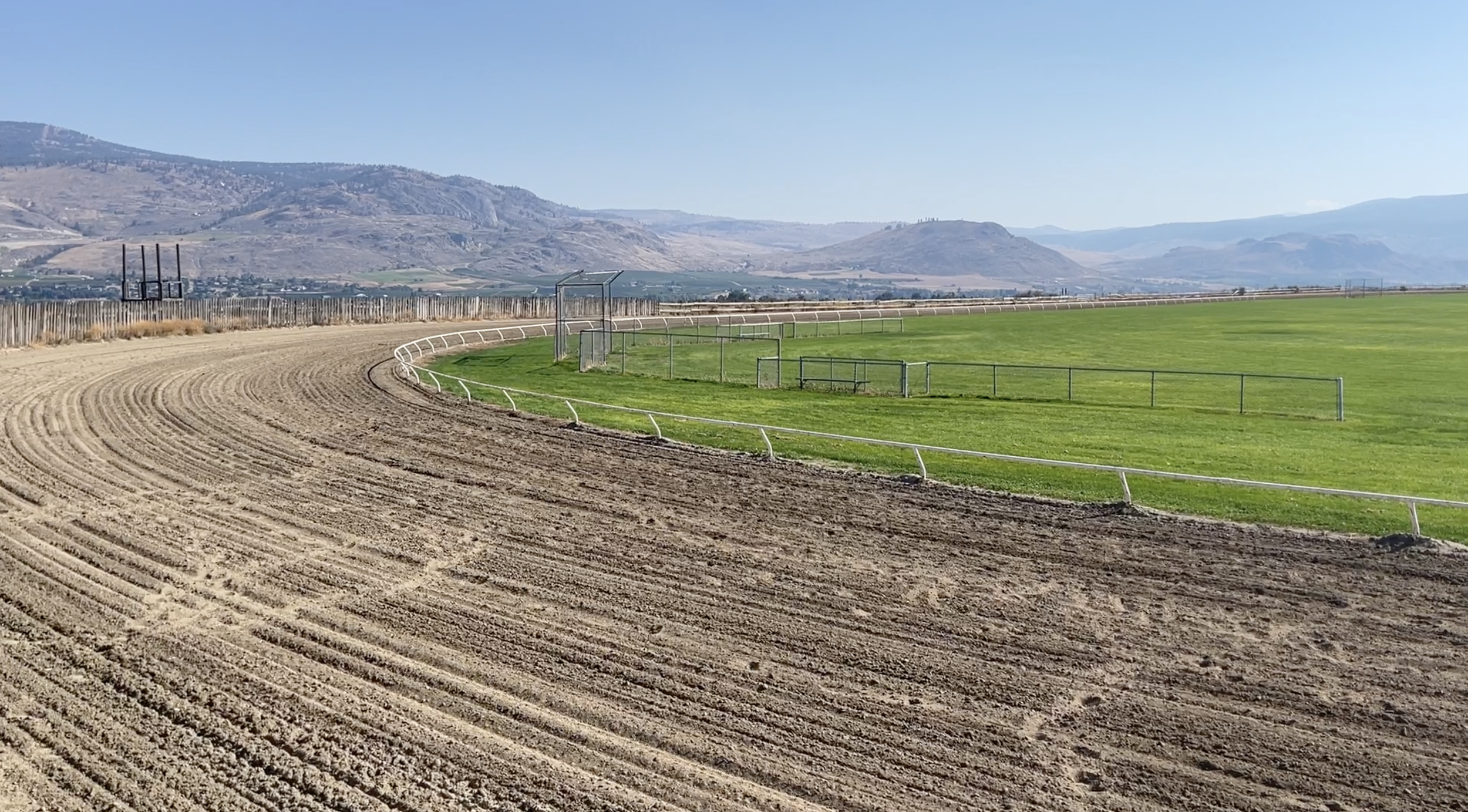
The Desert Park Track Osoyoos, BC Canada
Specifications of a potential track
This page is a quick look at the type of track and specifications needed for the Indian Relay if we were to undertake to bring this event to the Okanagan Valley of BC, Canada.
The 1-kilometer (5/8-mile) track has a 247-meter homestretch.
The video on the left was the track condition of the dirt track at Desert Park in Osoyoos, in 2022. It has since been changed for Standardbred racing… see below.
The objective is to see if it would be possible to adapt this track to be suitable for Indian Relay, or if it would make sense to create a new venue elsewhere.
Video of the track at Osoyoos to the left.
Osoyoos track on a map
Track Condition
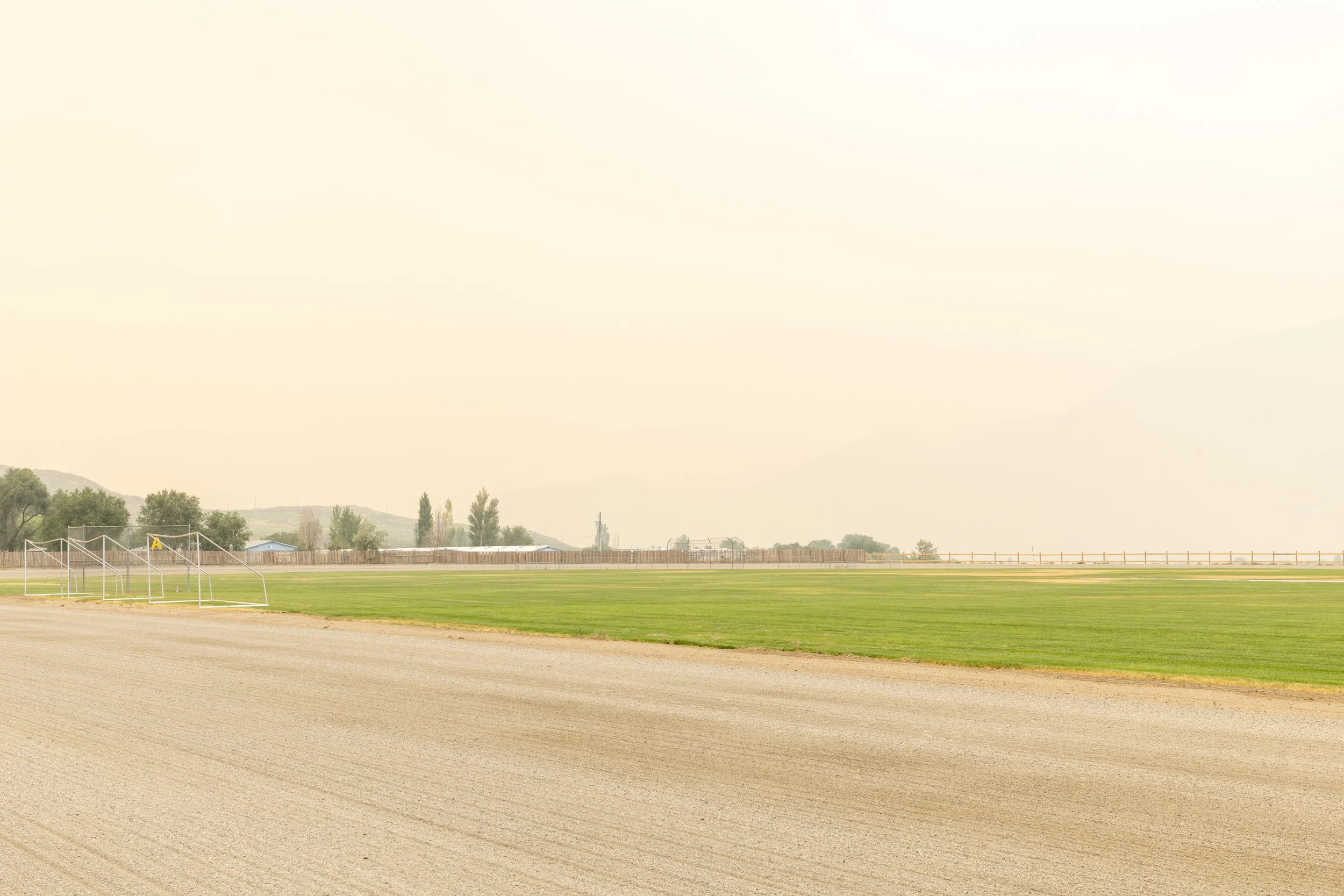
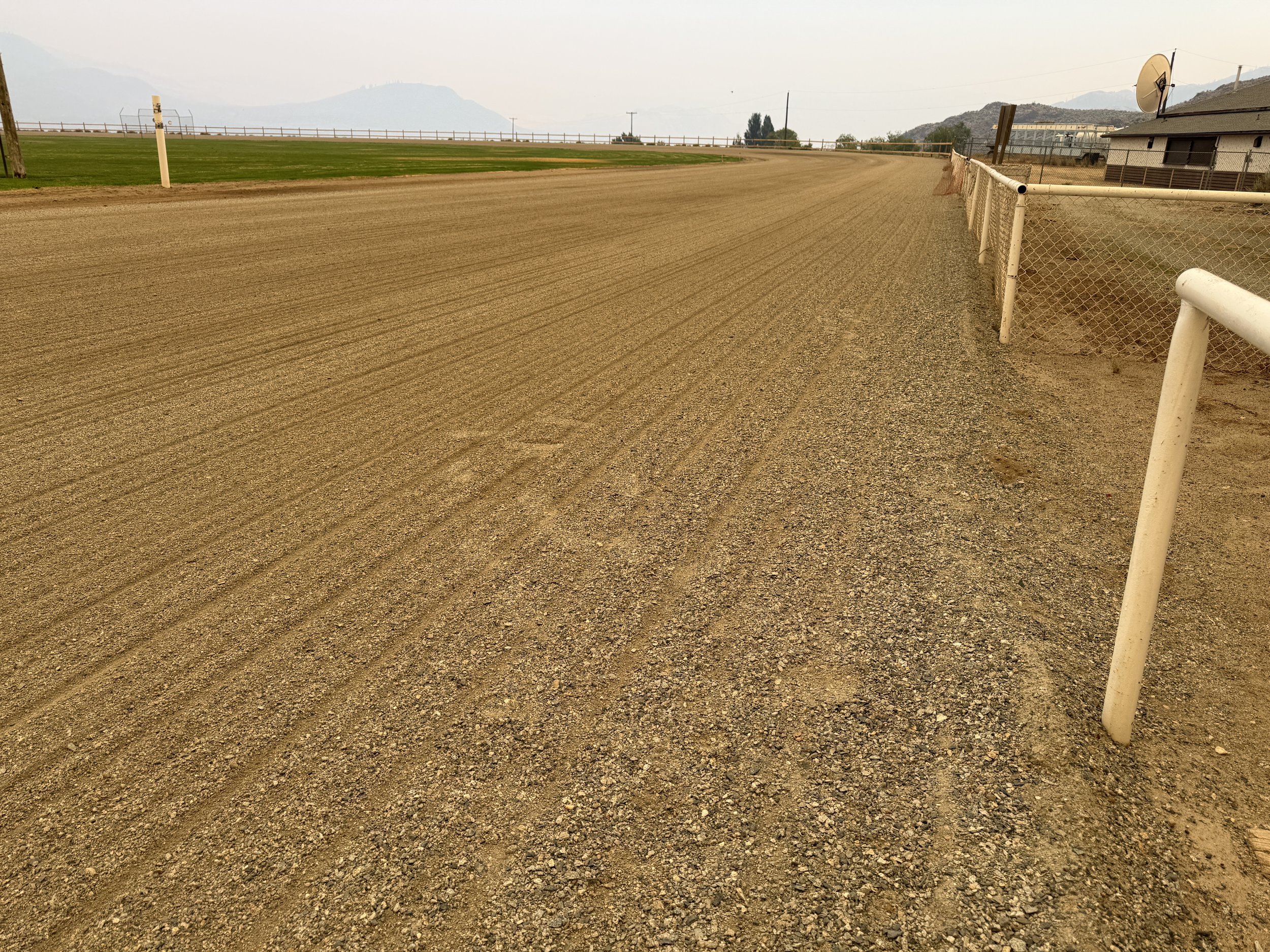
Recently the Osoyoos track has been turned into a track for Standardbred harness racing which is a packed fine-dirt track possibly with a limestone-screenings surface topped with a shallow, loose layer of pebbles. Allegedly this is the firmness needed for a cart and horse to move at high speeds with enough give to protect the horse's joints.

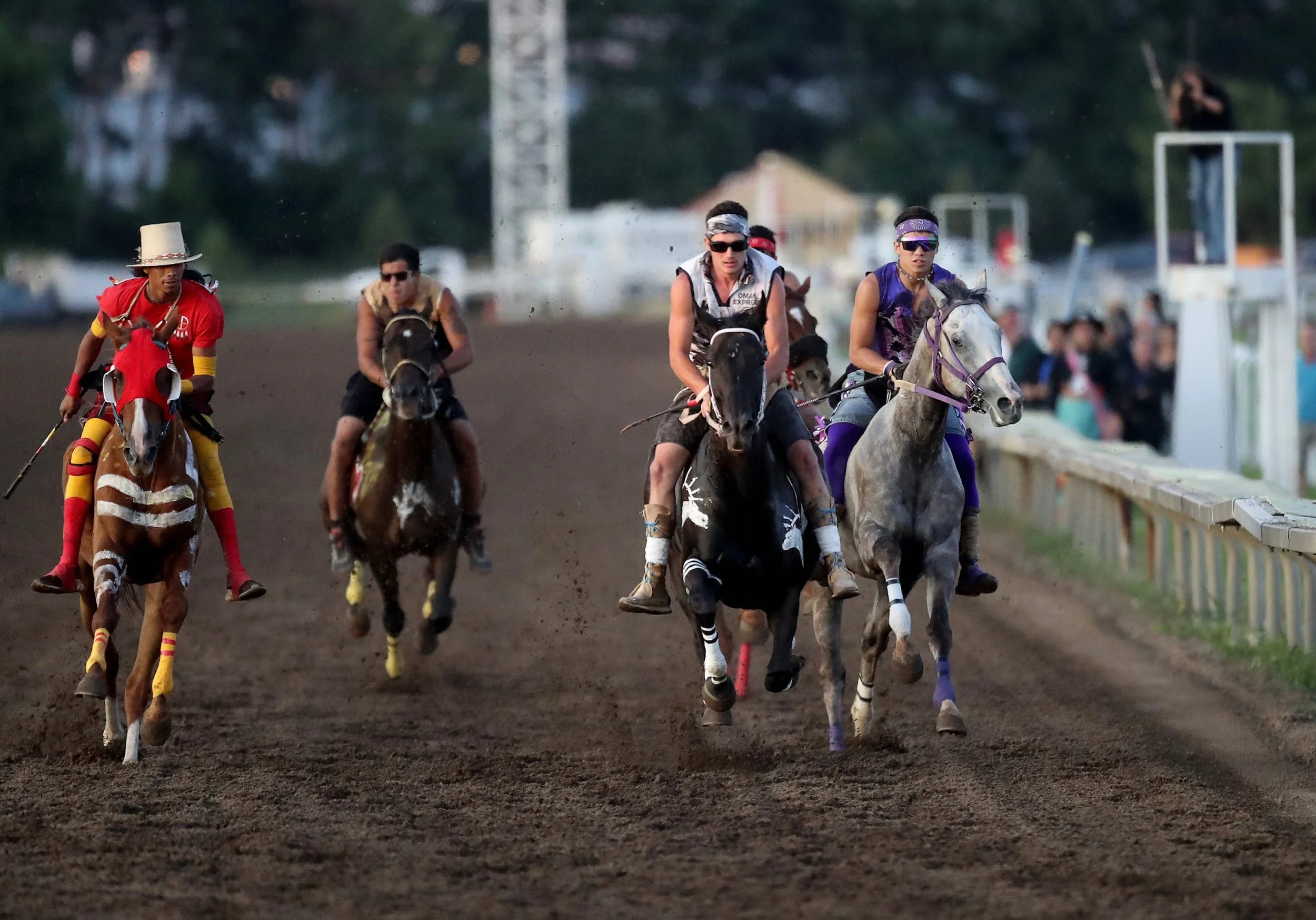
Traditional DIRT track
The dirt track in the image below is more traditional for the Indian Relay. Photo by Diana Volk
Importance of the right track surface
In Indian Relay, the track surface is vital because horses race bareback at full gallop and team members run on foot during chaotic, high-speed exchanges. A proper dirt or turf surface provides essential traction for sharp turns, reduces the risk of dangerous slips or falls for both horse and rider, and minimizes joint impact during intense acceleration. Source: Buffalo Bill Center of the West
Safety and Stability
• Hoof Traction: A well-graded, cushioned dirt surface gives thoroughbreds the grip needed to corner hard without sliding or losing footing. The Globe and Mail
• Human Footing: During the exchange zone, teammates ("muggers" and "holders") must sprint, catch incoming running animals, and plant their feet while managing frightened or high-adrenaline horses; loose or muddy dirt causes severe footing wrecks. PBS
• Injury Prevention: Hard-packed or uneven tracks increase the risk of leg strains, fractures, or tendon damage for horses running bareback without standard stabilization.
Performance and Exchange Impact
• Pace and Momentum: Consistent surface depth allows riders to judge their dismounts and leaps accurately; deep mud or loose sand deadens momentum and makes explosive mid-stride transitions unpredictable.
• Fair Competition: Smooth track maintenance prevents localized ruts, hard clay spots, or puddles that could advantage or disadvantage specific lanes during multi-team heats.
Above from Google search
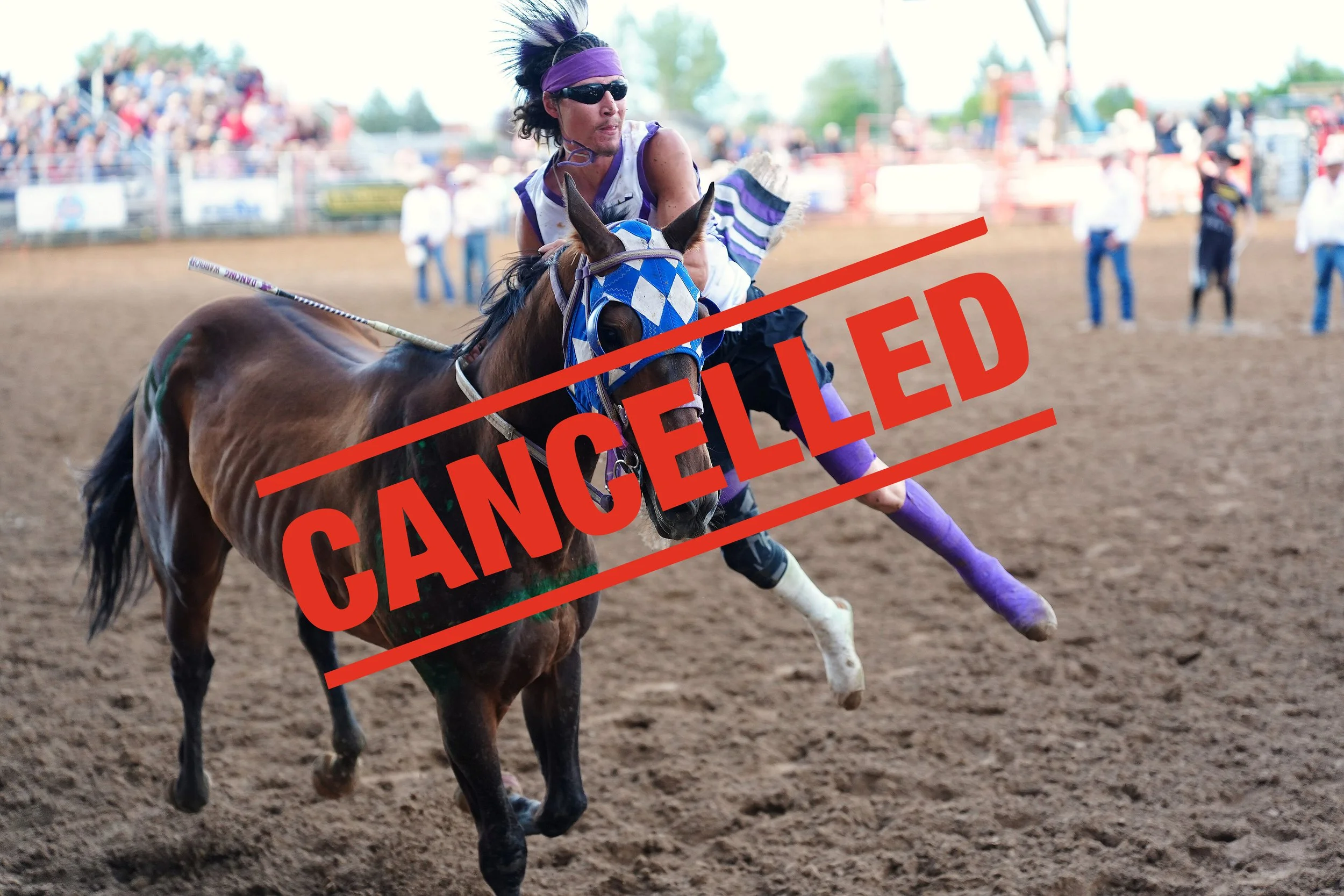
Cancellation Insurance
Event Disruptions:
Races can be delayed or called off due to extreme weather, poor air quality from wildfires, or venue/infrastructure issues.
Cancellation insurance… In the event of any weather or fire events it would reimburse non-refundable deposits and lost expenses in case we need to cancel, postpone, or interrupt the Indian Relay due to unforeseen circumstances outside our control.
We will be looking into this to make sure we are covered on all fronts.
Photo by Runawaymo Wikimedia